The Magic of Cooking with Children: 8 Tips for Raising Curious, Confident Eaters
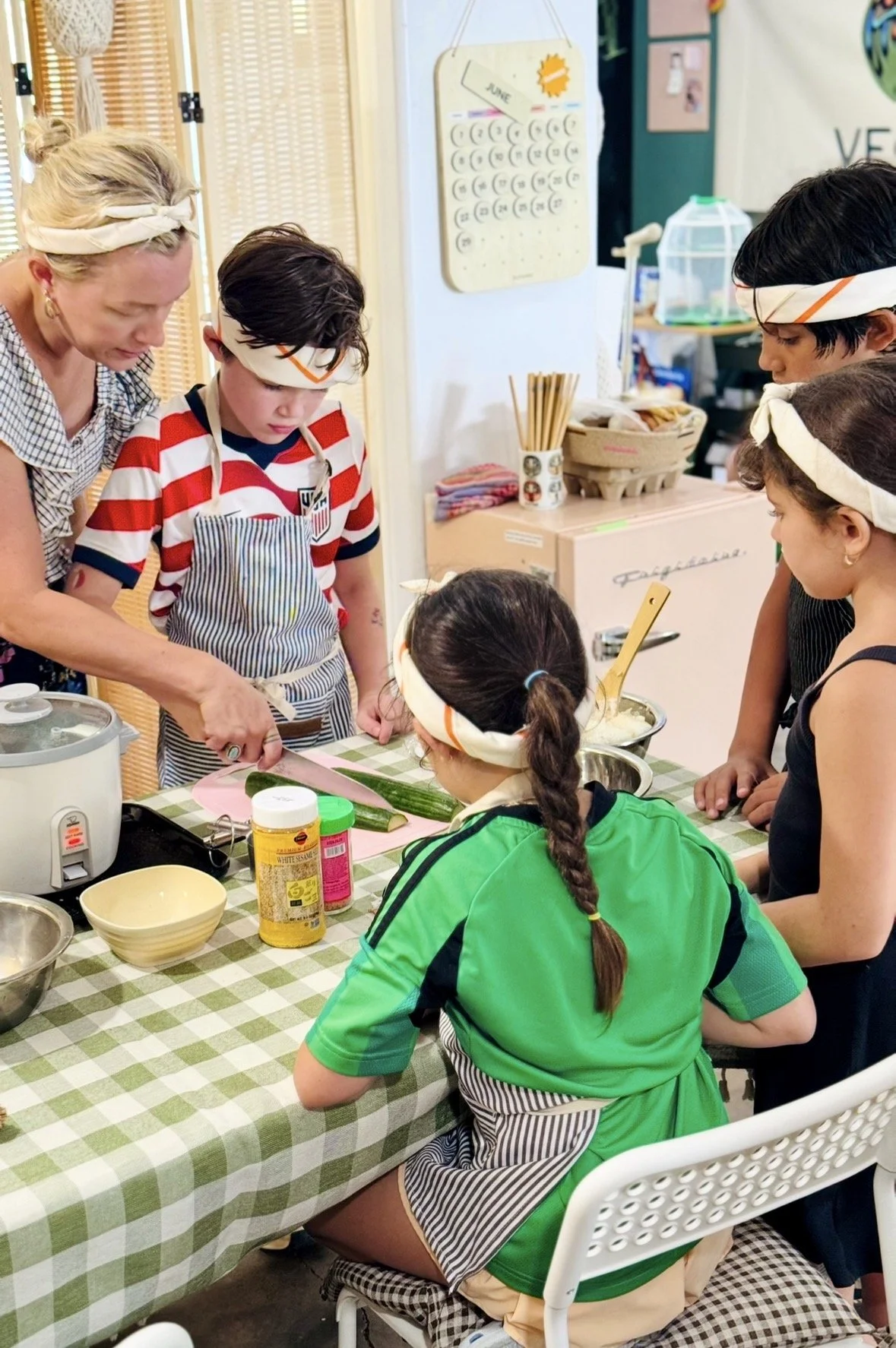
Chefs hard at work learning sushi making during our Japanese cultural immersion summer camp.
There is so much magic in cooking with your kids.
You will often see children who typically turn up their noses at certain foods become surprisingly adventurous in the kitchen. When their hands are part of the process, they're much more likely to taste something new because they have ownership over it—and the pressure is off. I've been cooking with children for nearly a decade, and I can honestly say that whenever I make an intentional effort to cook with my own daughter, her eating habits and overall attitude toward food become noticeably more positive.
So, without further ado, here are a few tips to make cooking with kids fun, enjoyable, and (mostly) fuss-free.
Tip #1: Don't do it!
I'm kidding. Sort of.
If cooking feels stressful to you and simply isn't your thing, there's no need to force it. Maybe your child has a grandfather who loves to barbecue or an aunt who enjoys baking. Encourage those opportunities when they arise! The goal isn't necessarily that you become a master chef—it's that your child experiences the joy of making food with someone who enjoys it.
Tip #2: Get inspired yourself.
Circling back to what I just said, if cooking isn't your thing, that's okay—but maybe try a new angle. Take this as your sign to sign up for that Thai cooking class. Make this the summer of homemade pizza. Learn how to make fresh pasta. Curiosity is contagious, and your enthusiasm will naturally spill over to your children.
Tip #3: Process beats product.
When cooking with kids, especially in the beginning, try to let go of the outcome. The cookies might be lopsided. The soup might be over-stirred. That's okay.
Get excited together about something you want to try. Maybe you just had a delicious okonomiyaki at a Japanese restaurant and want to recreate it at home. Maybe your child is fascinated by mixing drinks and would love to experiment with agua fresca recipes. Lean into the experience. Set up an agua fresca stand. Make memories. The process is where the magic happens.
Tip #4: Start small.
Don't begin at 4:00 p.m. on a busy weeknight when you're simply trying to get dinner on the table. Take it from me.
Instead, choose a slow Sunday afternoon. Bake muffins. Make homemade guacamole. Mix up pancake batter. A successful 20-minute cooking experience is far better than a stressful two-hour ordeal. Slow down as much as your can, and narrate what your hands are doing.
Tip #5: Expand your culinary horizons.
Exposure matters.
Try new restaurants. Taste foods from different cultures. Visit a local food festival. There is so much joy in exploring the world through food.
And don't underestimate the power of travel—even if "travel" simply means driving across town to somewhere like Asahi Japanese Imports for onigiri. Every new food experience broadens a child's palate and helps them become more curious, adventurous eaters. Whether you're sampling street tacos in Mexico City, trying dim sum for the first time, or discovering a family-owned Vietnamese restaurant in your own city, food can be a wonderful gateway to learning about people, places, and cultures.
Tip #6: Grow your own food.
Last year, I watched a child who brought potato chips for a snack every day happily munch broccoli straight from our Becker Green Classroom school garden—and then ask for more.
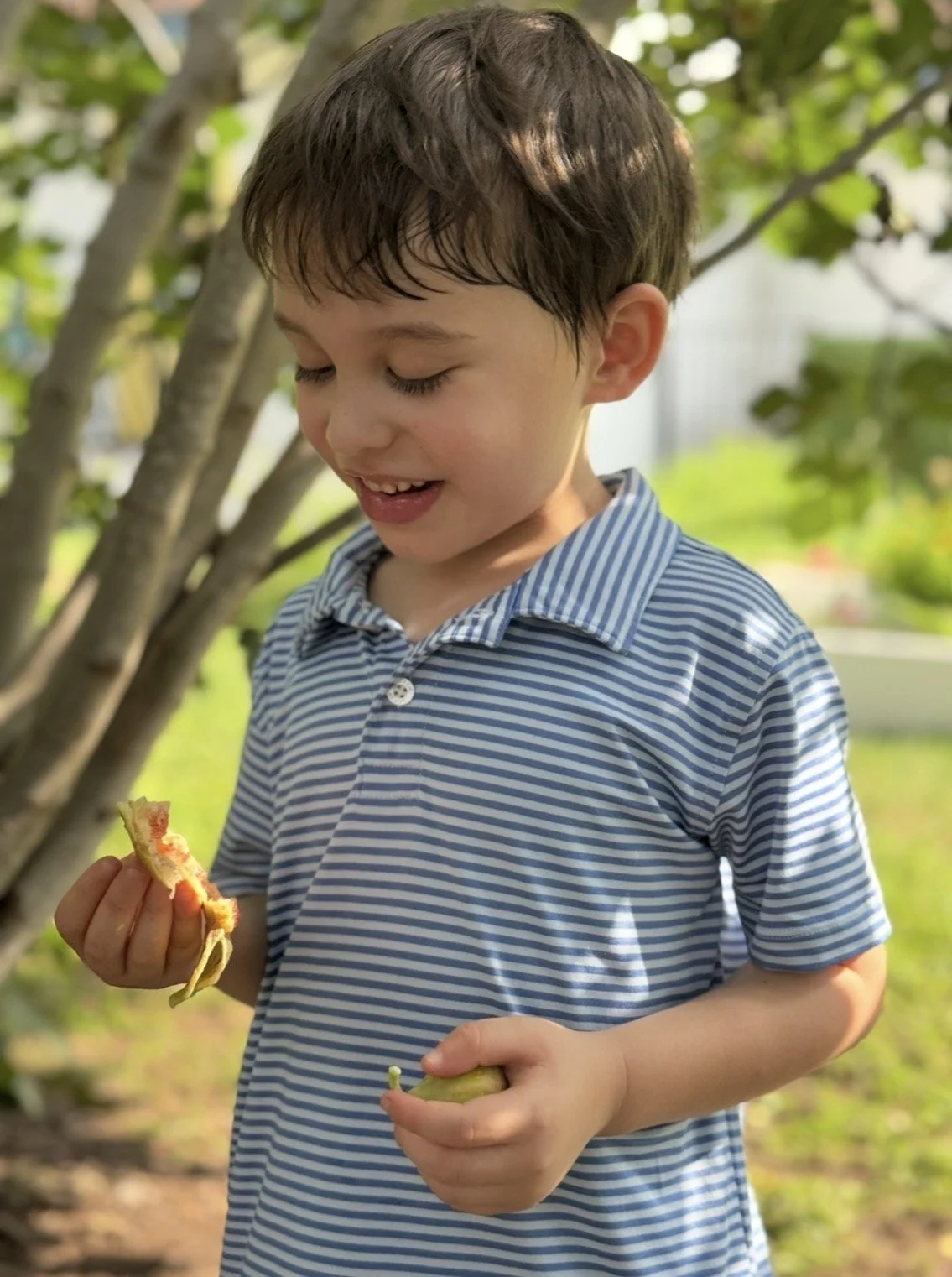
A student enjoying fresh figs off the tree.
When children grow food themselves, they're far more likely to taste it.
Growing food with your children is a magical and rewarding endeavor. Start small with a few herbs in pots on the patio or go big with raised beds and unique varieties from one of my favorite places on earth Barton Springs Nursery. Either way, you'll be amazed at how much pride children take in harvesting something they've cared for themselves.
Tip #7: Involve them in local food sourcing.
It's easy and convenient to order groceries online. As a busy working mom, I do it too.
But every now and then, invite your children into the process. Browse local produce together online with companies like Farmhouse Delivery. Visit a farmers market. Stop by the Boggy Creek Farm farm stand on a Saturday morning. Let them choose a fruit or vegetable they've never tried before and challenge yourselves to cook with it that week.
Children are much more invested in food when they've had a hand in selecting it.
Tip #8: Clean as you go.
This may be the least glamorous tip, but it might save your sanity.
One of the best kitchen habits you can teach children is to clean as they go. While the onions are sautéing, wash the cutting board. While the muffins are baking, wipe down the counter. Assign simple jobs like collecting scraps, rinsing measuring cups, or loading utensils into the dishwasher.
Not only does this make the final cleanup far less overwhelming, but it also teaches children that cooking and caring for a space go hand in hand. A clean kitchen makes cooking more enjoyable for everyone.
Most importantly, remember that you're not just making food. You're building confidence, creating memories, teaching life skills, and cultivating curiosity. The meal itself will be gone in a matter of minutes, but those moments spent side by side in the kitchen can last a lifetime.
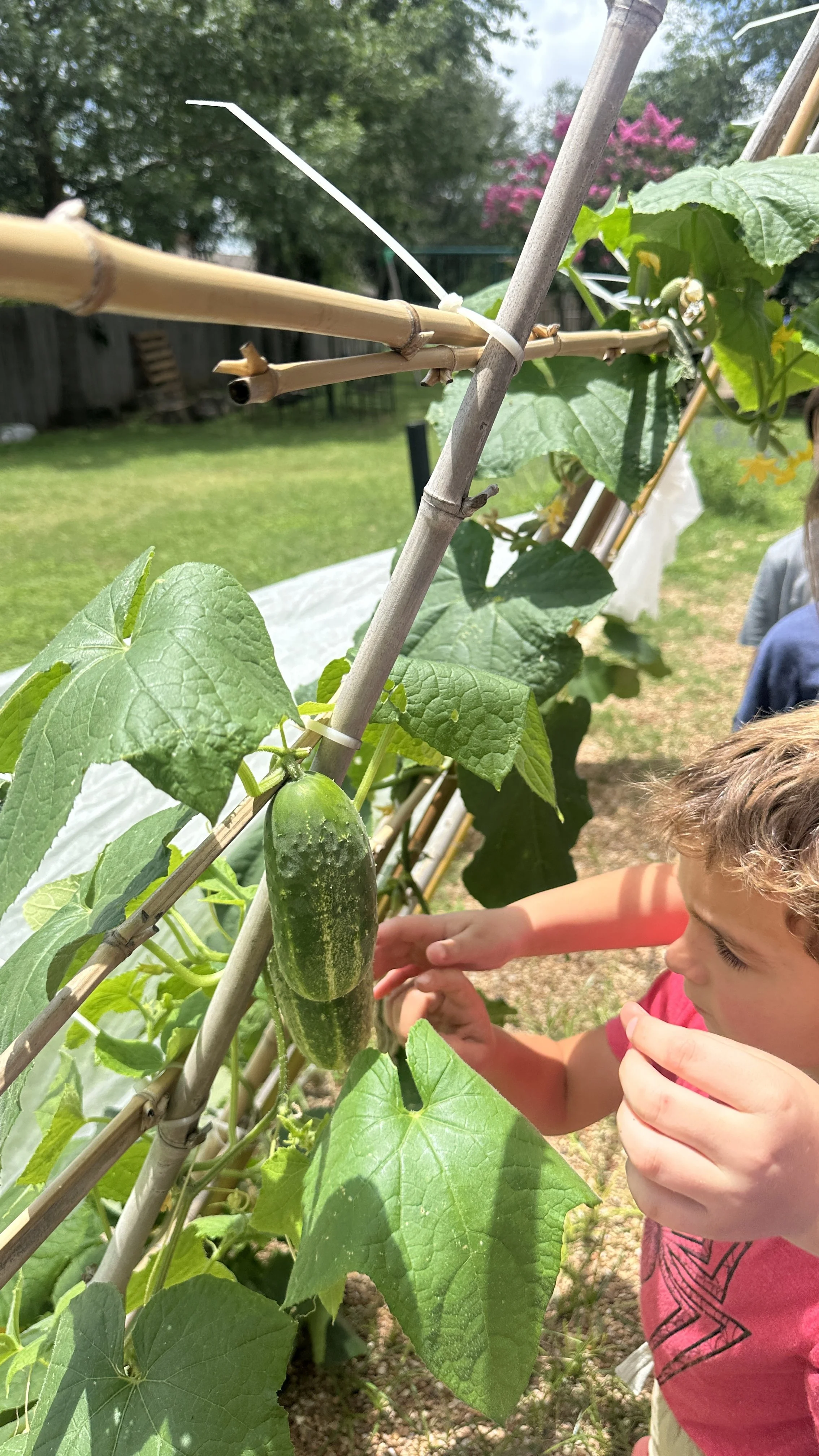
A student examining how cucumbers grow from our neighbors Kukumi Montessori, while we let our cucumbers sit in salt for smashed umeboshi cucumber salad.